Industrial Demolition and Dismantling Services in Belgium
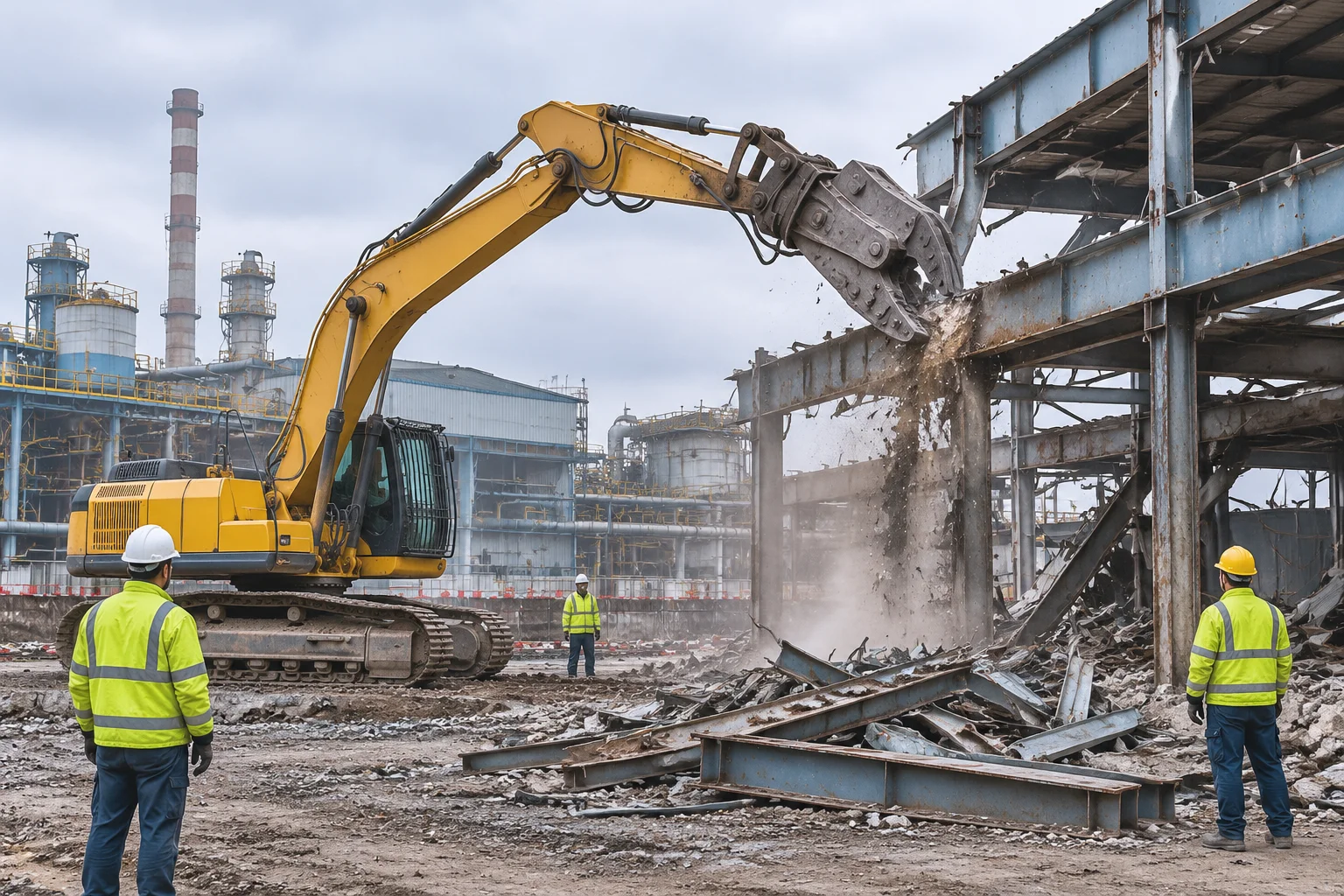
Tearing down a functional factory or a sprawling warehouse requires far more than heavy excavators and brute force. Industrial demolition is a disciplined engineering practice where every beam, column, and foundation block must be accounted for before the machinery starts its work. AURORA MEADOWS HOLDING BV approaches every project across Belgium with a strict focus on structural calculation, meticulous sequencing, and absolute safety on the ground.
Old industrial sites carry decades of hidden alterations, reinforced concrete layers, and complex metal frameworks. Ignoring these structural realities invites disaster, which is why our planning phase takes up as much operational dedication as the physical destruction itself. We study original blueprints, assess material fatigue, and map out drop zones before bringing our excavators and cutting shears onto the property.
Understanding Structural Complexity in Factories
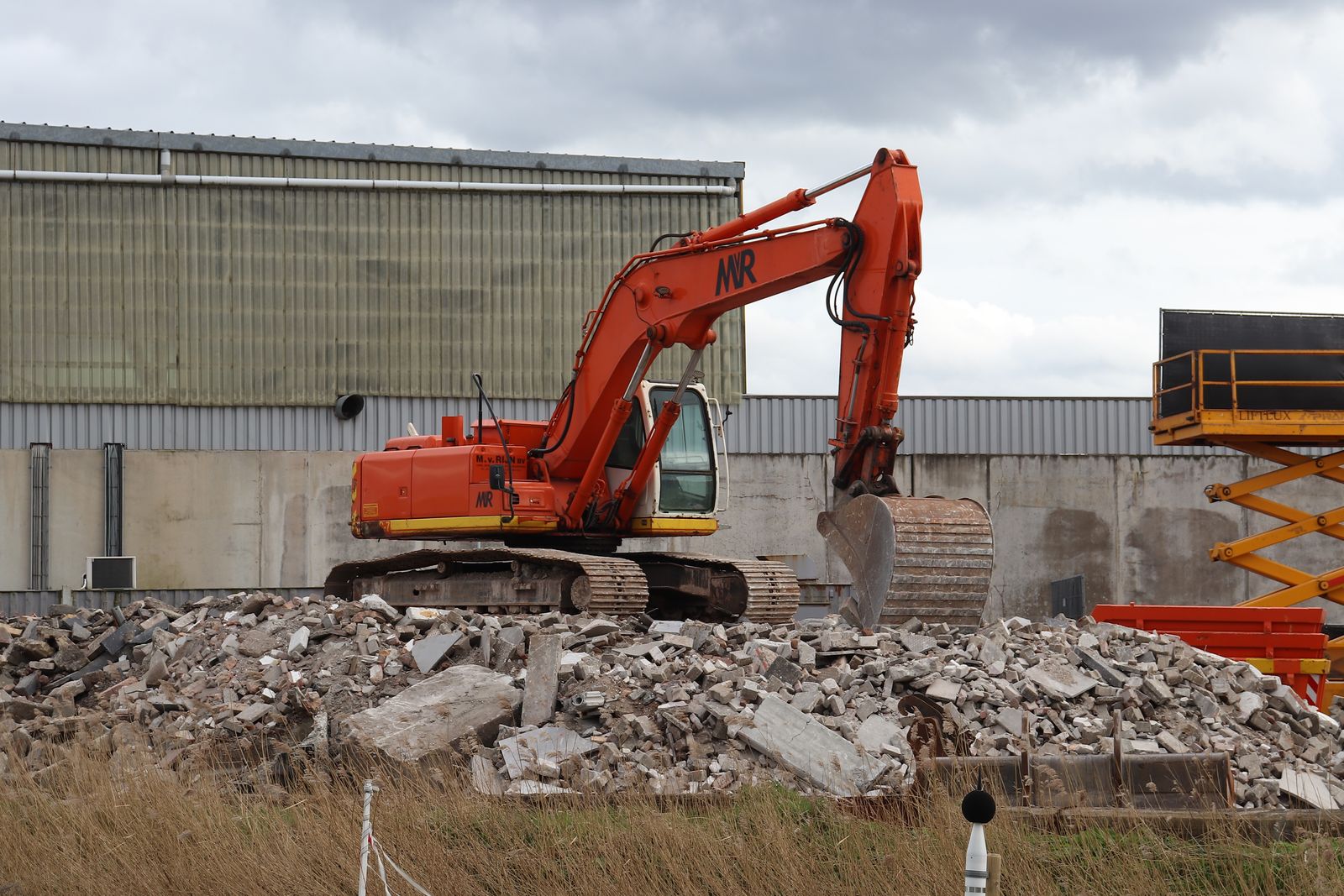
Modern production plants and old manufacturing hubs are built to withstand immense mechanical loads, making them exceptionally stubborn to take apart. Columns reinforced with dense steel rebar and multi-tiered mezzanine floors demand specialized cutting attachments and experienced operators who know how to read the tension in a falling span. We deploy high-reach excavators equipped with hydraulic shears to slice through heavy steel girders cleanly and predictably.
Safety margins are calculated down to the centimeter when working near operational boundaries or adjacent buildings. Our team sets up secure perimeter zones and constantly monitors wind speeds and vibration levels during heavy shear operations. Every operator communicates through encrypted radio channels, ensuring that ground spotters have an immediate voice when a section begins to shift unexpectedly.
Managing Warehouse Demolition Projects
Warehouses often present massive floor spans and lightweight roof trusses that can destabilize rapidly if cut in the wrong sequence. We tackle these large logistics facilities by stripping away cladding panels and roof sheeting first, exposing the primary skeleton of the building to daylight and open air. This staged exposure prevents sudden structural collapses and allows us to sort recyclable metals on the spot.
Concrete floor slabs and deep foundation footings require heavy breakers and crushers to pulverize underground obstructions completely. We break these foundations into manageable aggregate pieces that can be loaded onto transport trucks without holding up traffic around the industrial park. Ground clearance is executed systematically from the rear boundary forward to the main access gates.
The Logistics of Steel Structure Removal
Steel frames can be bolted, welded, or riveted together, and each joining method dictates a different removal technique. We prefer cold-cutting methods using hydraulic shears over open torches wherever flammable residues or tight spaces make fire hazards unacceptable. This approach protects surrounding structures and keeps the work environment clean of toxic smoke and excessive spark fallout.
- Detailed structural load analysis prior to cutting
- Controlled mechanical pulling of unstable frames
- Immediate sorting of ferrous and non-ferrous scrap
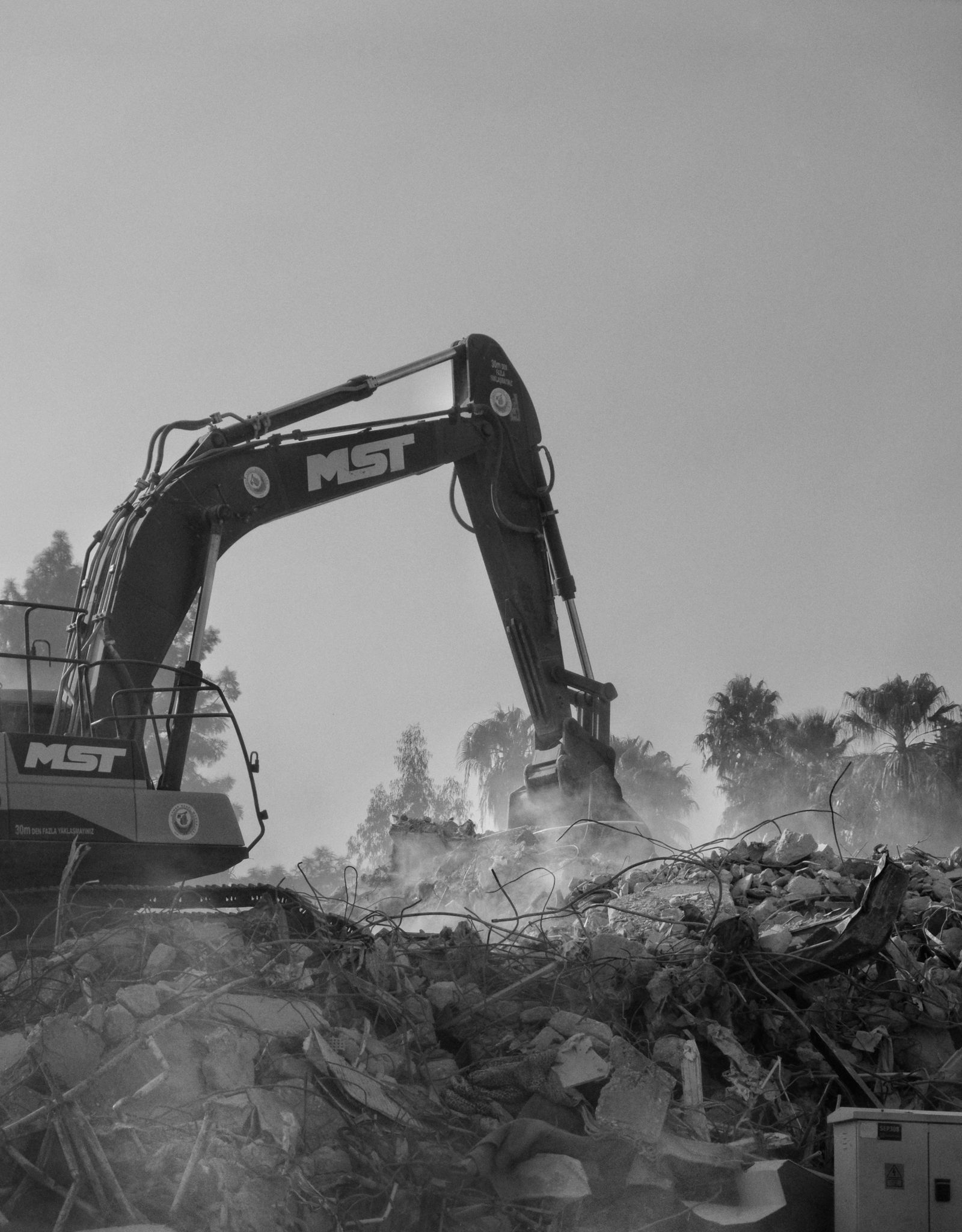
- Dust suppression using high-pressure water cannons
- Continuous monitoring of site vibration parameters
- Strict personal protective equipment enforcement for all crew
Scrap metal recovered from these industrial skeletons is not treated as mere waste but as a valuable resource that gets channeled back into the regional recycling stream. We maintain sorting bins directly behind the demolition line, separating copper, brass, structural steel, and light iron immediately as they drop from the building. This rigorous sorting keeps transport loads organized and maximizes the recovery value for site owners.
Environmental Responsibility and Debris Control
Dust, noise, and runoff are the three main disruptions that industrial demolition brings to a neighborhood, and controlling them is part of our daily routine. We deploy mobile water misting cannons that blanket the cutting zone in a fine fog, trapping airborne particles before they drift across the fence line. Perimeter silt fences catch any sediment runoff during heavy rainstorms, keeping local drainage ditches clear of mud and industrial slurry.
Hazardous materials require specialized containment protocols that we integrate into the schedule before heavy machinery arrives on site. Our team coordinates with certified waste handlers to remove asbestos lagging, chemical residue tanks, and industrial insulation safely. By handling these hazardous elements first, we ensure that subsequent heavy demolition proceeds without contaminating the surrounding soil or endangering our operators.
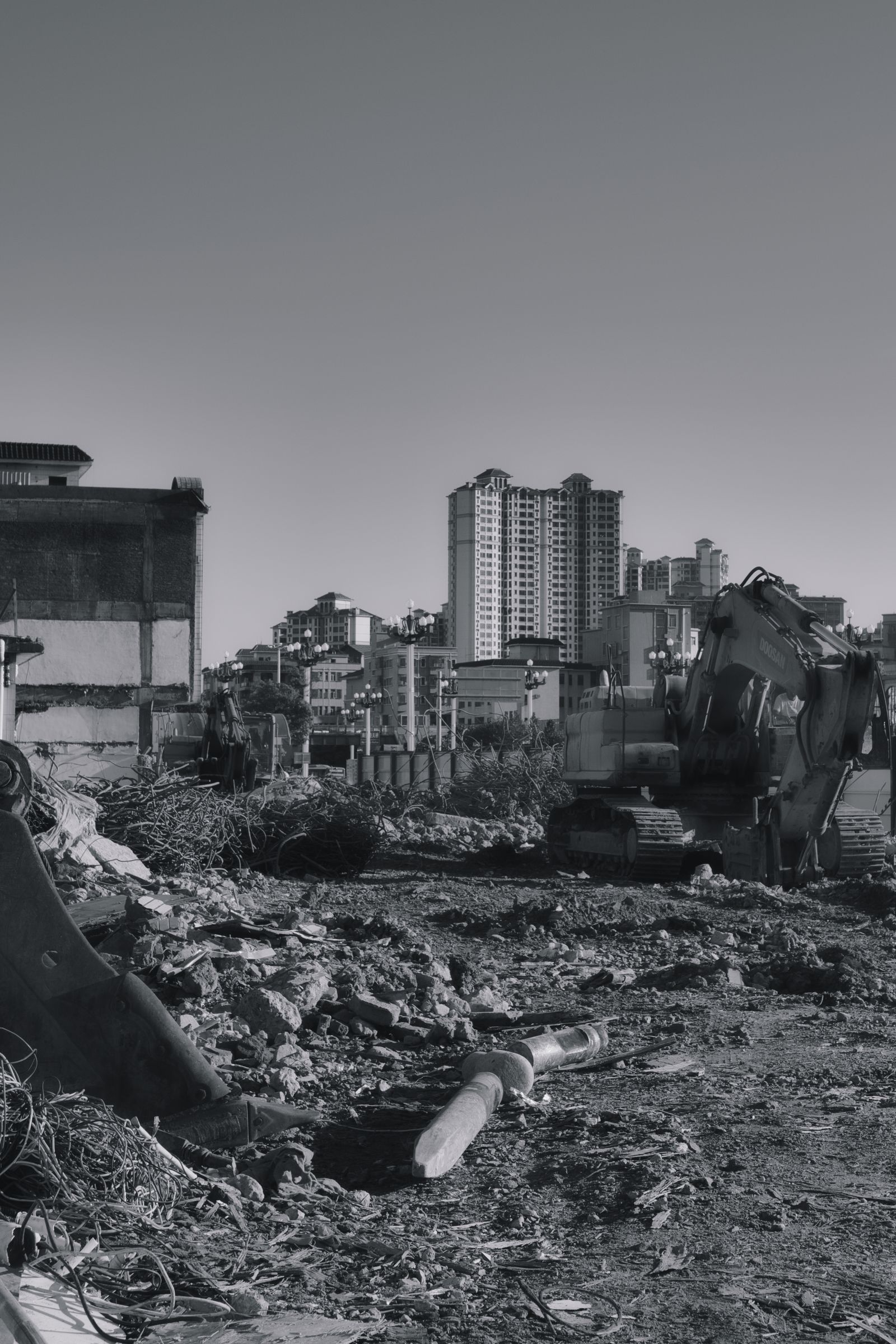
Redeveloping an industrial site starts with leaving behind a clean, flat, and stable plot ready for its next chapter. We finish our operations by backfilling basement voids, compacting sub-base layers with heavy rollers, and grading the entire surface to proper drainage specifications. A well-executed demolition leaves no lingering hazards, no tangled rebar in the dirt, and no unfinished business for the developer who takes over the land tomorrow.
Comments
Marie Dubois
The lack of professionalism was felt at every stage of cooperation. I really don't recommend it.
Jan Peeters
Pleasant cooperation and clarity in work. I'm glad I chose this company.
Sophie Janssens
The politeness of the employees does not prevent the poor quality of services. I will look for another company.
Luc Van de Velde
Great company! This is not the first time I have used their services, and I am always satisfied with the quality and approach to work. I recommend!